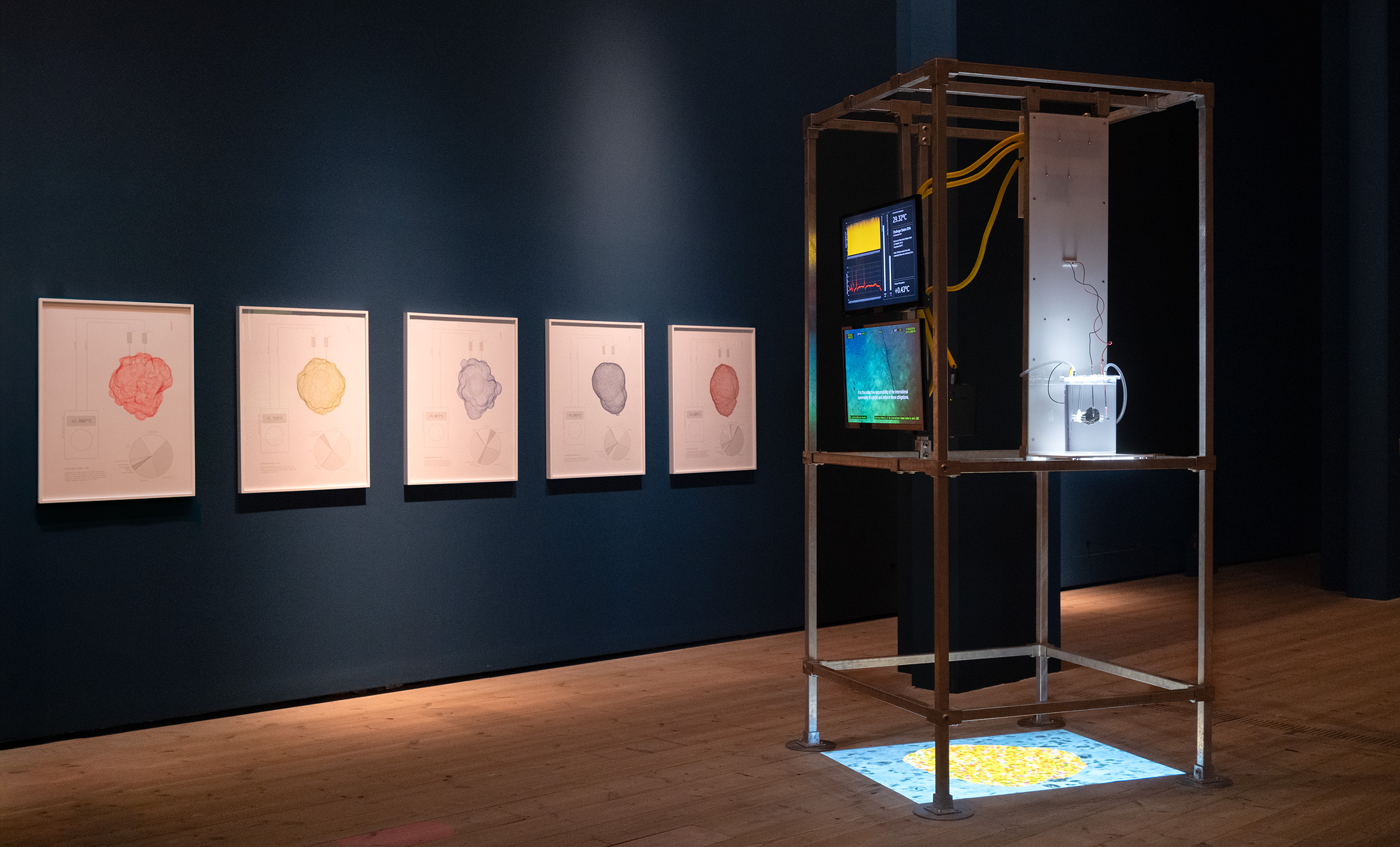
Installation view of Galvanic Lander and Nodule Drawings, Baltic Centre for Contempoary Art. 2025
Rob Smith is currently working as an artist in the research project Visualising the Deep Sea in the Age of Climate Change, at the Norwegian University of Science and Technology (NTNU). His work explores how digital imaging technologies —such as photogrammetry, hyperspectral imaging, and side-scan sonar— shape our understanding of deep-sea environments.
Drawing on this research, he has developed new artworks that engage with the emerging context of deep-sea mining for polymetallic nodules. This includes tracing the history of nodule discovery through collections at the Natural History Museums in Oxford and London, as well as visiting Andrew Sweetman at Scottish Association of Marine Science (SAMS) to learn more about his recent findings that these nodules produce oxygen at 4,500 metres below the ocean’s surface.
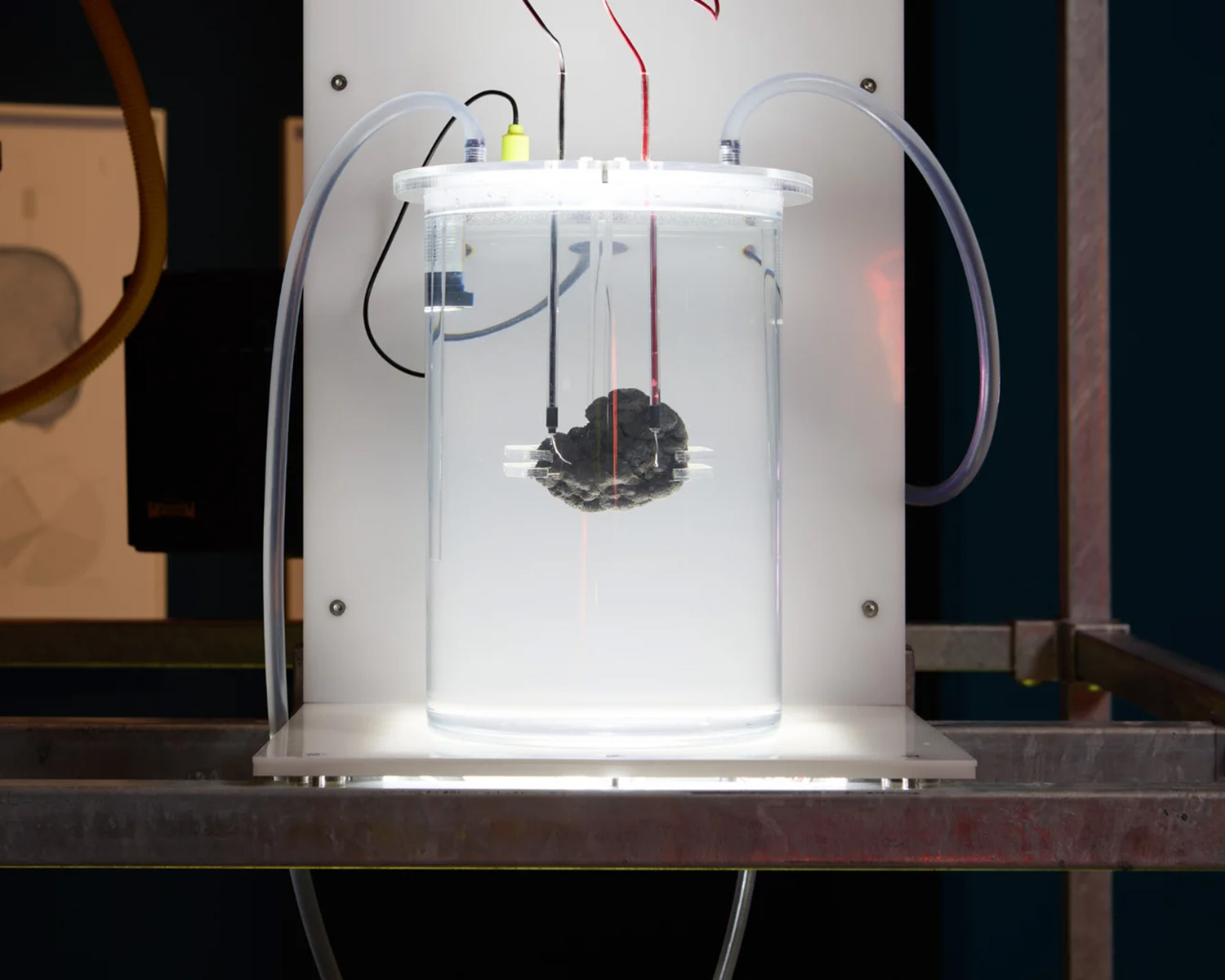
Galvanic Lander 2025 (detail) Installed Baltic Centre for Contemporary Art.Photo: Tom Carter © 2025 Baltic
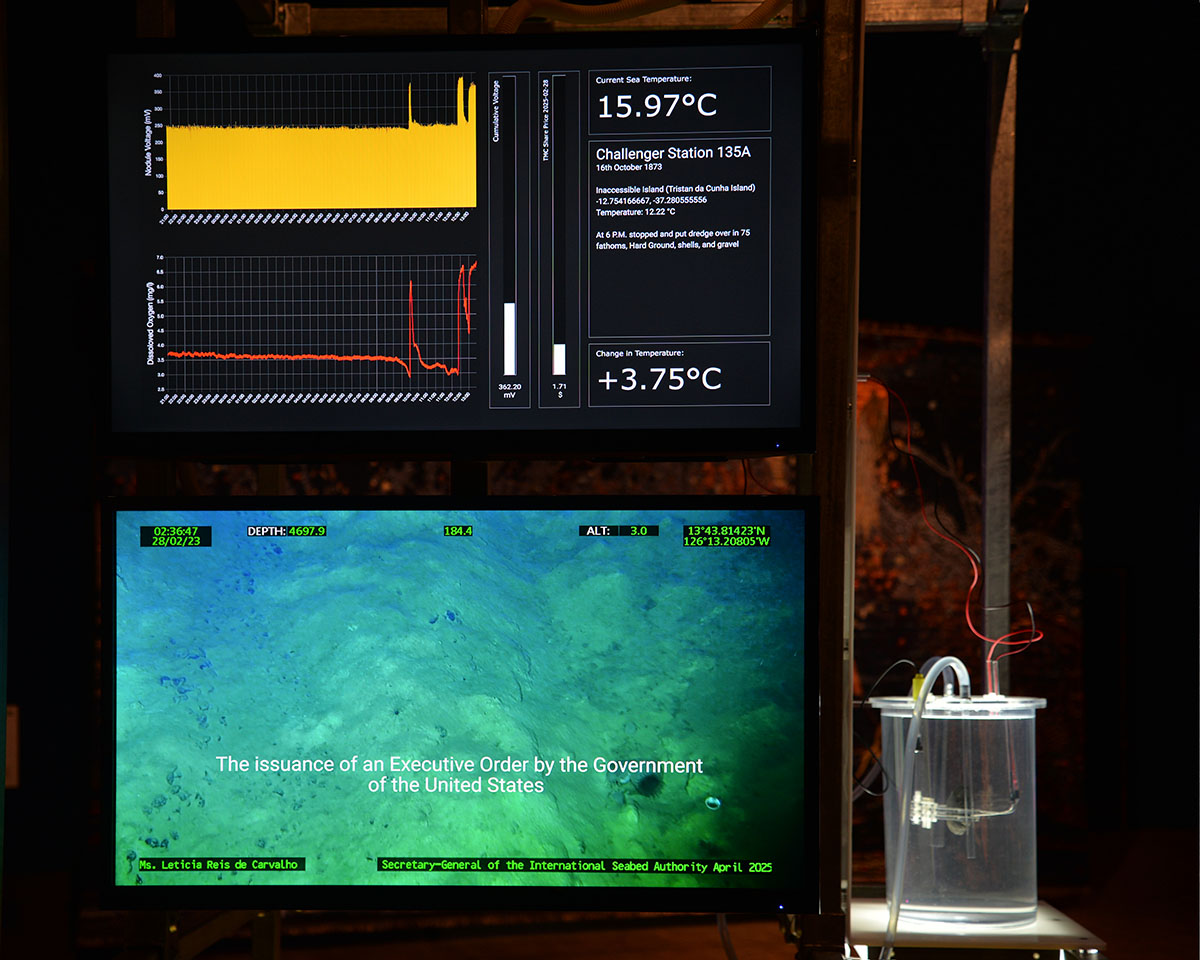
Galvanic Lander 2025 (detail) Installed Baltic Centre for Contemporary Art.Photo: Rob Smith
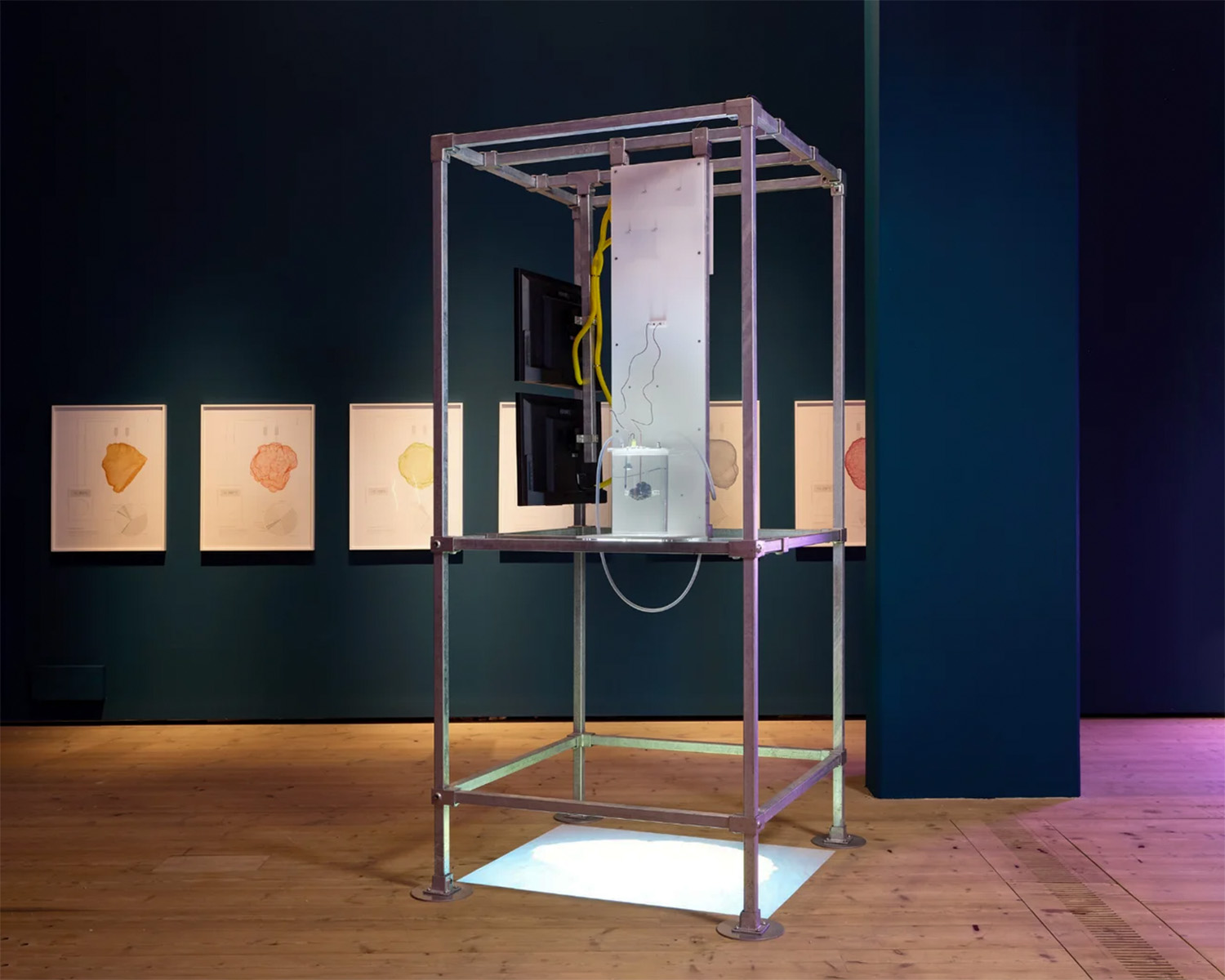
Installation view For All At Last Return 2025 Baltic Centre for Contemporary Art.Photo: Tom Carter © 2025 Baltic
Galvanic Lander 2025 explores the histories and possible futures of deep sea mining — from the discovery of polymetallic nodules in the 1870’s by HMS Challenger, to the recent discovery of ‘dark oxygen’ and Donald Trump’s executive order to unleash America's offshore mineral resources. At the centre of the work is a polymetallic nodule is held in a container of sea water with two platinum electrodes pressed onto its surface. These electrodes monitor the voltages generated by this nodule (around 2-300mV) which along with data for the concentrations of dissolved oxygen in the water control a 3D animation of a polymetallic nodule on the floor. The work also draws in sea surface temperature data from from the Copernicus Satellite Program, the share price of The Metals Company who are aiming to commercially exploit the nodules, alongside testimonies and historcal documents that highlight the different interests and risks involved in mining this emerging marine site.
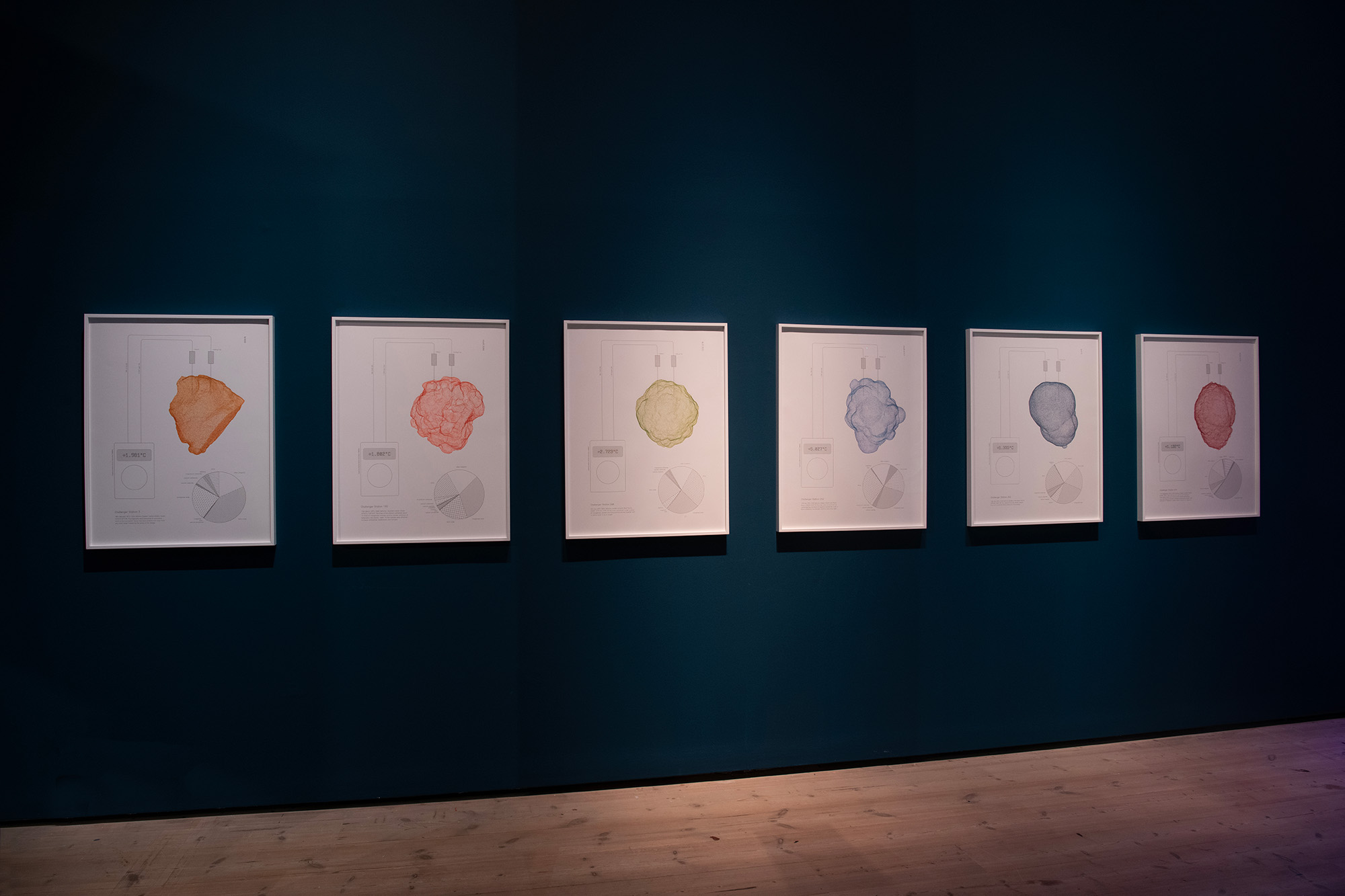
Nodule Drawings 2025. (installation view), For All At Last Return, Baltic Centre for Contemporary Art, Gateshead. Photo: Colin Davison © 2025 Baltic
In the exhibition For All At Last Return alongside Galvanic Lander, are a series of drawings of some of the nodules collected by HMS Challenger during its seminal 3 year voyage of ocean exploration in the 1870's. They are created from 3D photgrammetric models of these nodules in the collections of the Natural History Museums in Oxford and London. Using a pen plotter the 3D point cloud data is translated into a series of points which are mapped to colours that correspond to the material composition of the nodules as described by the scientific team on board Challenger. They bring together data from the Challenger Reports, the Copernicus Satellite program and the stock markets to weave these historic museum objects into the context of climate change and deep sea mining.
The drawings trace the environmental, industrial, and speculative narratives that surround deep sea nodules, offering a layered reflection on extraction, observation, and the unforeseen consequences of technological expansion.
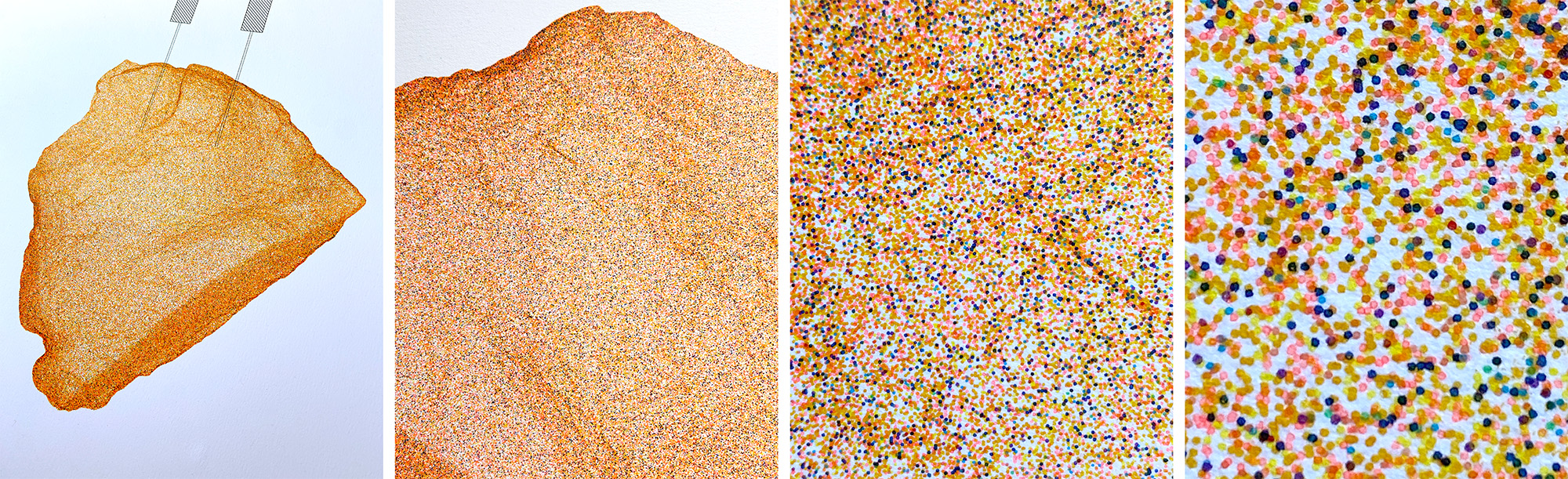
Nodule Drawing. 2025 (detail) . Ink on paper. 86x64 cm
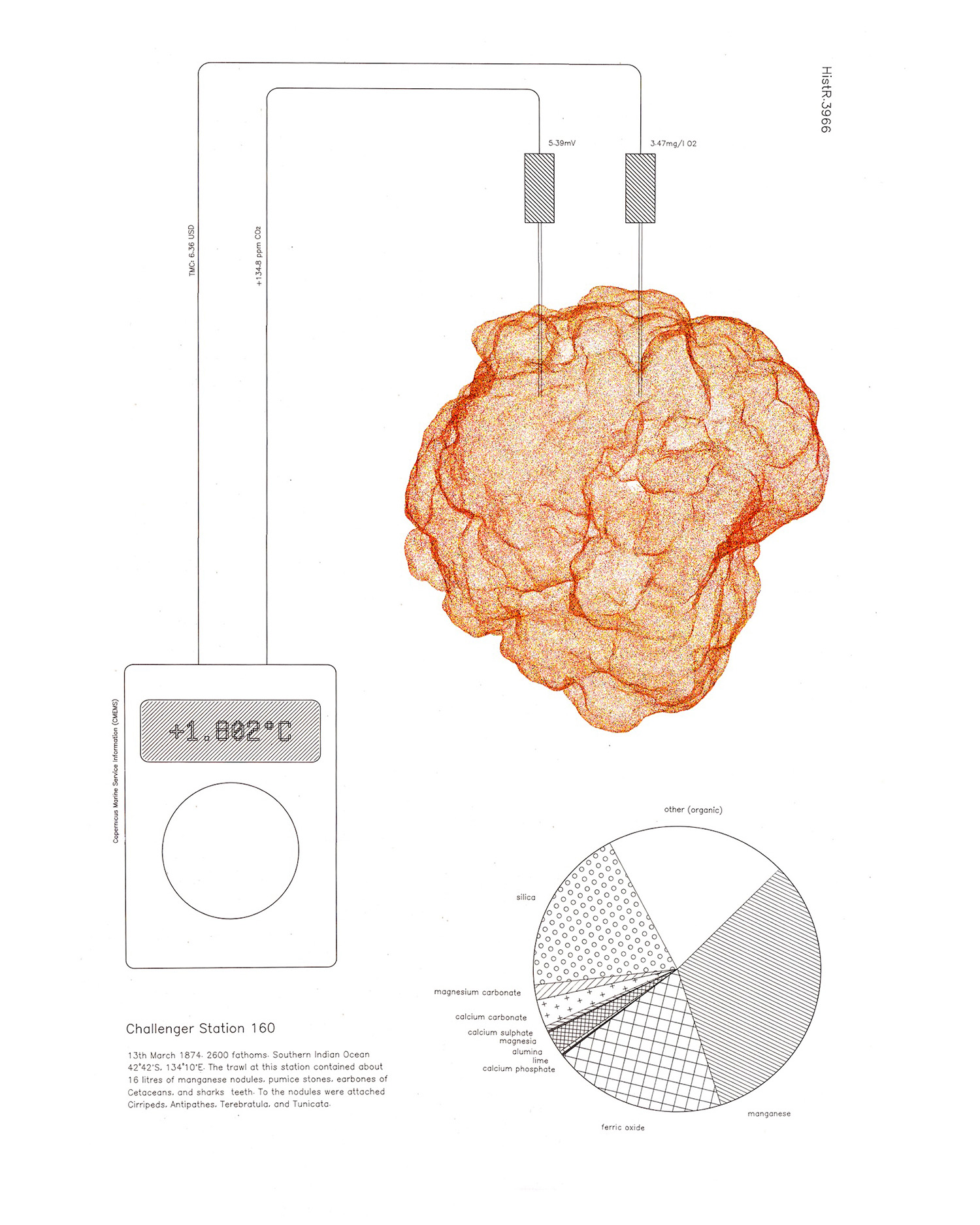
Nodule HISTR.3966 2025. Ink on paper. 86x64 cm